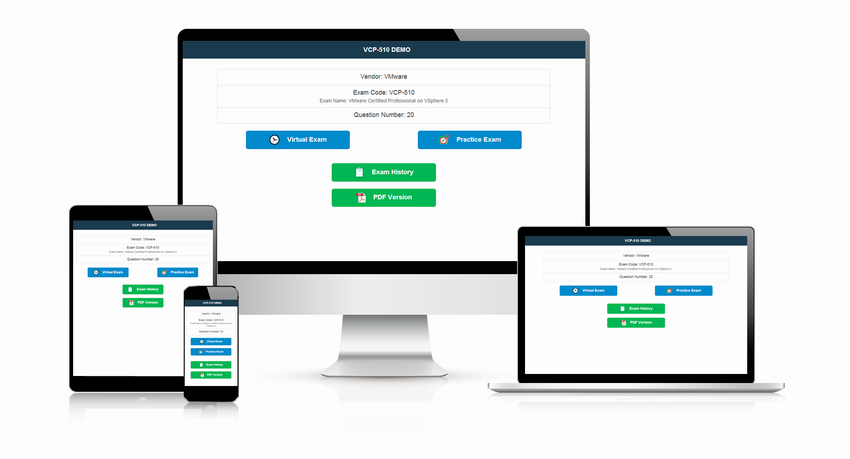
Cisco CCIE Routing and Switching Written : 400-101

  • Exam Code: 400-101
  • Exam Name: CCIE Routing and Switching Written Exam
  • Updated: Jun 06, 2026
  • Q & A: 150 Questions and Answers

PDF Version

PC Test Engine

Online Test Engine

Total Price: $69.99

About Cisco CCIE Routing and Switching Written : 400-101 Exam

Attach great importance to privacy protection

That we enter into an information age means the high risk of identity theft to some extent, especially when you reveal personal information to unknown sources. But our company is confident to provide the most reliable CCIE Routing and Switching Written Exam exam study material for the broad masses of consumers. All your personal information will be protected effectively. A series of strict laws and regulations have been promulgated to assure your safe payment and use about CCIE Routing and Switching Written Exam study reference.

Our CCIE Routing and Switching Written Exam update exam training expects to help you get the exam certification with scientific method. We shall do our best to live up to your choice and expectation.

Instant Download: Upon successful payment, Our systems will automatically send the 400-101 dumps you have purchased to your mailbox by email. (If not received within 12 hours, please contact us. Note: don't forget to check your spam.)

One-year free updating available

Our company has established a long-term partnership with those who have purchased our CCIE Routing and Switching Written Exam exam study material. We have made all efforts to update our product in order to help you deal with any change, making you confidently take part in the CCIE Routing and Switching Written Exam actual exam. In a year after your payment, we will inform you that when the CCIE Routing and Switching Written Exam exam training material should be updated and send you the latest CCIE Routing and Switching Written Exam exam training material. We will also provide some discount for your updating after a year if you are satisfied with our CCIE Routing and Switching Written Exam exam training material.

As is well-known, CCIE Routing and Switching Written Exam exam has been one of the most important examinations in the whole industry. We may foresee the prosperous market with more and more workers attempting to reach a high level. CCIE Routing and Switching Written Exam valid exam materials can provide a whole set of training materials for you to achieve success. Moreover, we have guaranteed you that you would have no trouble during the actual test with our CCIE Routing and Switching Written Exam update exam training.

Our professional experts devote plenty of time and energy to developing the CCIE Routing and Switching Written Exam update exam training. You can trust us and let us be your honest cooperator in your future development. Here are several advantages about our CCIE Routing and Switching Written Exam exam practice demo for your reference. We sincerely suggest you to spare some time to have a glance over the following items.

Free Download 400-101 Exam PDF Torrent

Our 400-101 exam dumps will include those topics:

  • Infrastructure Security 5%
  • Evolving Technologies 10%
  • Infrastructure Services 12%
  • Network Principles 10%
  • Layer 2 Technologies 13%
  • Layer 3 Technologies 37%
  • VPN Technologies 13%

For more info visit: Cisco 400-101 Exam Reference

100% pass rate we guarantee

According to the recent market survey, we make a conclusion that our CCIE Routing and Switching Written Exam update exam training has helped every customer get the exam certification. Especially in network time, you may be confused by variety of training materials and be worried about whether you can pass the CCIE Routing and Switching Written Exam exam test. What's more, you may practice a lot, but still have difficulties in the CCIE Routing and Switching Written Exam exam test. Here you can choose our test materials, which has proved its value based upon perfect statistics.

Cisco 400-101 Exam Topics:

SectionWeightObjectives
Layer 3 Technologies37%

1 Addressing technologies
a)Identify, implement and troubleshoot IPv4 addressing and subnetting
a)[i] Address types, VLSM
a)[ii] ARP
b)Identify, implement and troubleshoot IPv6 addressing and subnetting
b)[i] Unicast, multicast
b)[ii] EUI-64
b)[iii] ND, RS/RA
b)[iv] Autoconfig/SLAAC, temporary addresses [RFC4941]
b)[v] Global prefix configuration feature
b)[vi] DHCP protocol operations
b)[vii] SLAAC/DHCPv6 interaction
b)[viii] Stateful, stateless DHCPv6
b)[ix] DHCPv6 prefix delegation

2 Layer 3 multicast
a)Troubleshoot reverse path forwarding
a)[i] RPF failure
a)[ii] RPF failure with tunnel interface
b)Implement and troubleshoot IPv4 protocol independent multicast
b)[i] PIM dense mode, sparse mode, sparse-dense mode
b)[ii] Static RP, auto-RP, BSR
b)[iii] BiDirectional PIM
b)[iv] Source-specific multicast
b)[v] Group to RP mapping
b)[vi] Multicast boundary
c)Implement and troubleshoot multicast source discovery protocol
c)[i] Intra-domain MSDP [anycast RP]
c) [ii] SA filter
d)Describe IPv6 multicast
d)[i] IPv6 multicast addresses
d)[ii] PIMv6

3 Fundamental routing concepts
a)Implement and troubleshoot static routing
b)Implement and troubleshoot default routing
c)Compare routing protocol types
c)[i] Distance vector
c)[ii] Link state
c)[iii] Path vector
d)Implement, optimize and troubleshoot administrative distance
e)Implement and troubleshoot passive interface
f)Implement and troubleshoot VRF lite
g)Implement, optimize and troubleshoot filtering with any routing protocol
h)Implement, optimize and troubleshoot redistribution between any routing protocol
i)Implement, optimize and troubleshoot manual and auto summarization with any routing protocol
j)Implement, optimize and troubleshoot policy-based routing
k)Identify and troubleshoot sub-optimal routing
l)Implement and troubleshoot bidirectional forwarding detection
m)Implement and troubleshoot loop prevention mechanisms
m)[i] Route tagging, filtering
m)[ii] Split horizon
m)[iii] Route poisoning
n)Implement and troubleshoot routing protocol authentication
n)[i] MD5
n)[ii] Key-chain
n)[iii] EIGRP HMAC SHA2-256bit
n)[iv] OSPFv2 SHA1-196bit
n)[v] OSPFv3 IPsec authentication

4 RIP [v2 and v6]
a)Implement and troubleshoot RIPv2
b)Describe RIPv6 [RIPng]

5 EIGRP [for IPv4 and IPv6]
a)Describe packet types
a)[i] Packet types [hello, query, update, and such]
a)[ii] Route types [internal, external]
b)Implement and troubleshoot neighbor relationship
b)[i] Multicast, unicast EIGRP peering
b)[ii] OTP point-to-point peering
b)[iii] OTP route-reflector peering
b)[iv] OTP multiple service providers scenario
c)Implement and troubleshoot loop free path selection
c)[i] RD, FD, FC, successor, feasible successor
c)[ii] Classic metric
c)[iii] Wide metric
d)Implement and troubleshoot operations
d)[i] General operations
d)[ii] Topology table, update, query, active, passive
d)[iii] Stuck in active
d)[iv] Graceful shutdown
e)Implement and troubleshoot EIGRP stub
e)[i] Stub
e)[ii] Leak-map
f)Implement and troubleshoot load-balancing
f)[i] equal-cost
f)[ii] unequal-cost
f)[iii] add-path
g)Implement EIGRP [multi-address] named mode
g)[i] Types of families
g)[ii] IPv4 address-family
g)[iii] IPv6 address-family
h)Implement, troubleshoot and optimize EIGRP convergence and scalability
h)[i] Describe fast convergence requirements
h)[ii] Control query boundaries
h)[iii] IP FRR/fast reroute [single hop]
h)[iv] Summary leak-map
h)[v] Summary metric

6 OSPF [v2 and v3]
a)Describe packet types
a)[i] LSA yypes [1, 2, 3, 4, 5, 7, 9]
a)[ii] Route types [N1, N2, E1, E2]
b)Implement and troubleshoot neighbor relationship
c)Implement and troubleshoot OSPFv3 address-family support
c)[i] IPv4 address-family
c)[ii] IPv6 address-family
d)Implement and troubleshoot network types, area types and router types
d)[i] Point-to-point, multipoint, broadcast, non-broadcast
d)[ii] LSA types, area type: backbone, normal, transit, stub, NSSA, totally stub
d)[iii] Internal router, ABR, ASBR
d)[iv] Virtual link
e)Implement and troubleshoot path preference
f)Implement and troubleshoot operations
f)[i] General operations
f)[ii] Graceful shutdown
f)[iii] GTSM [Generic TTL Security Mechanism]
g)Implement, troubleshoot and optimize OSPF convergence and scalability
g)[i] Metrics
g)[ii] LSA throttling, SPF tuning, fast hello
g)[iii] LSA propagation control [area types, ISPF]
g)[iv] IP FRR/fast reroute [single hop]
g)[v] LFA/loop-free alternative [multi hop]
g)[vi] OSPFv3 prefix suppression

7 BGP
a)Describe, implement and troubleshoot peer relationships
a)[i] Peer-group, template
a)[ii] Active, passive
a)[iii] States, timers
a)[iv] Dynamic neighbors
b)Implement and troubleshoot IBGP and EBGP
b)[i] EBGP, IBGP
b)[ii] 4 bytes AS number
b)[iii] Private AS
c)Explain attributes and best-path selection
d)Implement, optimize and troubleshoot routing policies
d)[i] Attribute manipulation
d)[ii] Conditional advertisement
d)[iii] Outbound route filtering
d)[iv] Communities, extended communities
d)[v] Multi-homing
e) Implement and troubleshoot scalability
e)[i] Route-reflector, cluster
e)[ii] Confederations
e)[iii] Aggregation, AS set
f)Implement and troubleshoot multiproctocol BGP
f)[i] IPv4, IPv6, VPN address-family
g)Implement and troubleshoot AS path manipulations
g)[i] Local AS, allow AS in, remove private AS
g)[ii] Prepend
g)[iii] Regexp
h)Implement and troubleshoot other features
h)[i] Multipath
h)[ii] BGP synchronization
h)[iii] Soft reconfiguration, route refresh
i)Describe BGP fast convergence features
i)[i] Prefix independent convergence
i)[ii] Add-path
i)[iii] Next-hop address tracking

8 ISIS [for IPv4 and IPv6]
a)Describe basic ISIS network
a)[i] Single area, single topology
b)Describe neighbor relationship
c)Describe network types, levels and router types
c)[i] NSAP addressing
c)[ii] Point-to-point, broadcast
d)Describe operations
e)Describe optimization features
e)[i] Metrics, wide metric

VPN Technologies13%

1 Tunneling
a)Implement and troubleshoot MPLS operations
a)[i] Label stack, LSR, LSP
a)[ii] LDP
a)[iii] MPLS ping, MPLS traceroute
b)Implement and troubleshoot basic MPLS L3VPN
b)[i] L3VPN, CE, PE, P
b)[ii] Extranet [route leaking]
c)Implement and troubleshoot encapsulation
c)[i] GRE
c)[ii] Dynamic GRE
c)[iii] LISP encapsulation principles supporting EIGRP OTP
d)Implement and troubleshoot DMVPN [single hub]
d)[i] NHRP
d)[ii] DMVPN with IPsec using preshared key
d)[iii] QoS profile
d)[iv] Pre-classify
e)Describe IPv6 tunneling techniques
e)[i] 6in4, 6to4
e)[ii] ISATAP
e)[iii] 6RD
e)[iv] 6PE/6VPE
f)Describe basic layer 2 VPN —wireline
f)[i] L2TPv3 general principals
f)[ii] ATOM general principals
g)Describe basic L2VPN — LAN services
g)[i] MPLS-VPLS general principals
g)[ii] OTV general principals

2 Encryption
a)Implement and troubleshoot IPsec with preshared key
a)[i] IPv4 site to IPv4 site
a)[ii] IPv6 in IPv4 tunnels
a)[iii] Virtual tunneling Interface [VTI]
b)Describe GET VPN

Network Principles10%

1 Network theory
a)Describe basic software architecture differences between IOS and IOS XE
a) [i] Control plane and Forwarding plane
a)[ii] Impact to troubleshooting and performances
a)[iii] Excluding specific platform's architecture
b)Identify Cisco express forwarding concepts
b)[i] RIB, FIB, LFIB, Adjacency table
b)[ii] Load balancing Hash
b)[iii] Polarization concept and avoidance
c)Explain general network challenges
c)[i] Unicast flooding
c)[ii] Out of order packets
c)[iii] Asymmetric routing
c)[iv] Impact of micro burst
d)Explain IP operations
d)[i] ICMP unreachable, redirect
d)[ii] IPv4 options, IPv6 extension headers
d)[iii] IPv4 and IPv6 fragmentation
d)[iv] TTL
d)[v] IP MTU
e)Explain TCP operations
e)[i] IPv4 and IPv6 PMTU
e)[ii] MSS
e)[iii] Latency
e)[iv] Windowing
e)[v] Bandwidth delay product
e)[vi] Global synchronization
e)[vii] Options
f)Explain UDP operations
f)[i] Starvation
f)[ii] Latency
f)[iii] RTP/RTCP concepts

2 Network implementation and operation
a)Evaluate proposed changes to a network
a)[i] Changes to routing protocol parameters
a)[ii] Migrate parts of a network to IPv6
a)[iii] Routing protocol migration
a)[iv] Adding multicast support
a)[v] Migrate spanning tree protocol
a)[vi] Evaluate impact of new traffic on existing QoS design

3 Network troubleshooting
a)Use IOS troubleshooting tools
a)[i] debug, conditional debug
a)[ii] ping, traceroute with extended options
a)[iii] Embedded packet capture
a)[iv] Performance monitor
b)Apply troubleshooting methodologies
b)[i] Diagnose the root cause of networking issue [analyze symptoms, identify and describe root cause]
b)[ii] Design and implement valid solutions according to constraints
b)[iii] Verify and monitor resolution
c)Interpret packet capture
c)[i] Using Wireshark trace analyzer
c)[ii] Using IOS embedded packet capture

Layer 2 Technologies13%

1 LAN switching technologies
a)Implement and troubleshoot switch administration
a)[i] Managing MAC address table
a)[ii] errdisable recovery
a)[iii] L2 MTU
b)Implement and troubleshoot layer 2 protocols
b)[i] CDP, LLDP
b)[ii] UDLD
c)Implement and troubleshoot VLAN
c)[i] Access ports
c)[ii] VLAN database
c)[iii] Normal, extended VLAN, voice VLAN
d)Implement and troubleshoot trunking
d)[i] VTPv1, VTPv2, VTPv3, VTP pruning
d)[ii] dot1Q
d)[iii] Native VLAN
d)[iv] Manual pruning
e)Implement and troubleshoot EtherChannel
e)[i] LACP, PAgP, manual
e)[ii] Layer 2, layer 3
e)[iii] Load-balancing
e)[iv] Etherchannel misconfiguration guard
f)Implement and troubleshoot spanning-tree
f)[i] PVST+/RPVST+/MST
f)[ii] Switch priority, port priority, path cost, STP timers
f)[iii] port fast, BPDUguard, BPDUfilter
f)[iv] loopguard, rootguard
g)Implement and troubleshoot other LAN switching technologies
g)[i] SPAN, RSPAN, ERSPAN
h)Describe chassis virtualization and aggregation technologies
h)[i] Multichassis
h)[ii] VSS concepts
h)[iii] Alternative to STP
h)[iv] Stackwise
h)[v] Excluding specific platform implementation
i)Describe spanning-tree concepts
i)[i] Compatibility between MST and RSTP
i)[ii] STP dispute, STP bridge assurance

2 Layer 2 multicast
a)Implement and troubleshoot IGMP
a)[i] IGMPv1, IGMPv2, IGMPv3
a)[ii] IGMP snooping
a)[iii] IGMP querier
a)[iv] IGMP filter
a)[v] IGMP proxy
b)Explain MLD
c)Explain PIM snooping

3 Layer 2 WAN circuit technologies
a)Implement and troubleshoot HDLC
b)Implement and troubleshoot PPP
b)[i] Authentication [PAP, CHAP]
b)[ii] PPPoE
b)[iii] MLPPP
c)Describe WAN rate-based ethernet circuits
c)[i] Metro and WAN Ethernet topologies
c)[ii] Use of rate-limited WAN ethernet services

Evolving Technologies v1.110%

1 Cloud
a)Compare and contrast public, private, hybrid, and multicloud design considerations
a)[i] Infrastructure, platform, and software as a service (XaaS)
a)[ii] Performance, scalability, and high availability
a)[iii] Security implications, compliance, and policy
a)[iv] Workload migration
b)Describe cloud infrastructure and operations
b)[i] Compute virtualization (containers and virtual machines)
b)[ii] Connectivity (virtual switches, SD-WAN and SD-Access)
b)[iii] Virtualization functions (NFVi, VNF, and L4/L6)
b)[iv] Automation and orchestration tools (CloudCenter, Cisco DNA-center, and Kubernetes)

2 Network programmability (SDN)
a)Describe architectural and operational considerations for a programmable network
a)[i] Data models and structures (YANG, JSON and XML)
a)[i] Device programmability (gRPC, NETCONF and RESTCONF)
a)[ii] Controller based network design (policy driven configuration and northbound/ southbound APIs)
a)[iii] Configuration management tools (agent and agentless) and version control systems (Git and SVN)

3 Internet of things (IoT)
a)Describe architectural framework and deployment considerations for IoT
a)[i] IoT technology stack (IoT Network Hierarchy, data acquisition and flow)
a)[ii] IoT standards and protocols (characteristics within IT and OT environment)
a)[iii] IoT security (network segmentation, device profiling, and secure remote)

Infrastructure Services12%

1 System management
a)Implement and troubleshoot device management
a)[i] Console and VTY
a)[ii] telnet, HTTP, HTTPS, SSH, SCP
a)[iii] [T]FTP
b)Implement and troubleshoot SNMP
b)[i] v2c, v3
c)Implement and troubleshoot logging
c)[i] Local logging, syslog, debug, conditional debug
c)[ii] Timestamp

2 Quality of service
a)Implement and troubleshoot end-to-end QoS
a)[i] CoS and DSCP mapping
b)Implement, optimize and troubleshoot QoS using MQC
b)[i] Classification
b)[ii] Network based application recognition [NBAR]
b)[iii] Marking using IP precedence, DSCP, CoS, ECN
b)[iv] Policing, shaping
b)[v] Congestion management [queuing]
b)[vi] HQoS, sub-rate ethernet link
b)[vii] Congestion avoidance [WRED]
c)Describe layer 2 QoS
c)[i] Queuing, scheduling
c)[ii] Classification, marking

3 Network services
a)Implement and troubleshoot first-hop redundancy protocols
a)[i] HSRP, GLBP, VRRP
a)[ii] Redundancy using IPv6 RS/RA
b)Implement and troubleshoot network time protocol
b)[i] NTP master, client, version 3, version 4
b)[ii] NTP Authentication
c)Implement and troubleshoot IPv4 and IPv6 DHCP
c)[i] DHCP client, IOS DHCP server, DHCP relay
c)[ii] DHCP options
c)[iii] DHCP protocol operations
c)[iv] SLAAC/DHCPv6 interaction
c)[v] Stateful, stateless DHCPv6
c)[vi] DHCPv6 prefix delegation
d)Implement and troubleshoot IPv4 network address translation
d)[i] Static NAT, dynamic NAT, policy-based NAT, PAT
d)[ii] NAT ALG
e)Describe IPv6 network address translation
e)[i] NAT64
e)[ii] NPTv6

4 Network optimization
a)Implement and troubleshoot IP SLA
a)[i] ICMP, UDP, Jitter, VoIP
b)Implement and troubleshoot tracking object
b)[i] Tracking object, tracking list
b)[ii] Tracking different entities [e.g. interfaces, routes, IPSLA, and such]
c) Implement and troubleshoot netflow
c)[i] Netflow v5, v9
c)[ii] Local retrieval
c)[iii] Export [configuration only]
d)Implement and troubleshoot embedded event manager
d)[i] EEM policy using applet
e)Identify performance routing [PfR]
e)[i] Basic load balancing
e)[ii] Voice optimization

Infrastructure Security5%

1 Device security
a)Implement and troubleshoot IOS AAA using local database
b)Implement and troubleshoot device access control
b)[i] Lines [VTY, AUX, console]
b)[ii] SNMP
b)[iii] Management plane protection
b)[iv] Password encryption
c)Implement and troubleshoot control plane policing
d)Describe device security using IOS AAA with TACACS+ and RADIUS
d)[i] AAA with TACACS+ and RADIUS
d)[ii] Local privilege authorization fallback

2 Network security
a)Implement and troubleshoot switch security features
a)[i] VACL, PACL
a)[ii] Stormcontrol
a)[iii] DHCP snooping
a)[iv] IP source-guard
a)[v] Dynamic ARP inspection
a)[vi] port-security
a)[vii] Private VLAN
b)Implement and troubleshoot router security features
b)[i] IPv4 access control lists [standard, extended, time-based]
b)[ii] IPv6 traffic filter
b)[iii] Unicast reverse path forwarding
c)Implement and troubleshoot IPv6 first hop security
c)[i] RA guard
c)[ii] DHCP guard
c)[iii] Binding table
c)[iv] Device tracking
c)[v] ND inspection/snooping
c)[vii] Source guard
c)[viii] PACL
d)Describe 802.1x
d)[i] 802.1x, EAP, RADIUS
d)[ii] MAC authentication bypass

Reference: https://www.cisco.com/c/en/us/training-events/training-certifications/exams/current-list/ccie-routing-switching.html

Fast delivery in ten minutes after payment

With the increasingly rapid pace of modern life, the lifestyle of people is changing bit by bit. They treasure time so much and are anxious to get what they want within less time. Our CCIE Routing and Switching Written Exam free download pdf can be a right choice for we can transfer it immediately through network in less than ten minutes, which is the fastest delivery in the field. That is to say, within ten minutes after payment, CCIE Routing and Switching Written Exam exam training material will be in your mailbox.

Cisco 400-101 Exam Certification Details:

Exam Code400-101 CCIE RS
Exam NameCCIE Routing and Switching Written Exam
Duration120 minutes
Exam RegistrationPEARSON VUE
Sample QuestionsCisco 400-101 Sample Questions
Passing ScoreVariable (750-850 / 1000 Approx.)
Recommended TrainingStudy Material Exam Resources
Evolving Technologies Study Resources
Cisco Expert-Level Training for CCIE Collaboration
Exam Price$450 USD
Number of Questions90-110

What Clients Say About Us

The 400-101 practice dumps are great assistance for me to pass the exam. Thanks! I am so lucky to choose Free4Torrent for support. Highly recommend!

Cornell Cornell       5 star  

I love 400-101 exam dumps. They are good to study. I bought the value pack but in fact PDF file is enough. Passed 400-101 exam easily!

Felix Felix       5 star  

The 400-101 preparetion dump does an excellent job of covering all required objectives. I used it only and get a good score. The high-effective of this 400-101 exam dump is really out of my expection!

Breenda Breenda       4 star  

Free4Torrent's 400-101 study guide is great, and i found it is easy to understand. I passed my exam last week.

Zachary Zachary       5 star  

It's really cool to study with the 400-101 exam dumps. Thanks a lot! It is valid and easy to start.It is so reliable to to help me pass the 400-101 exam!

Clarence Clarence       5 star  

I spend only one week to prepare for real test and I passed . The 400-101 study guide is really suitable for people who is busy.

Beatrice Beatrice       4.5 star  

This Cisco 400-101 dump is absolutely valid. I made the exam today and i scored 86%. Nearly 80% the questions i got from this dump

Stanford Stanford       4.5 star  

Most precise 400-101 learning materials! After i finished my 400-101 exam and found that almost 90% questions are from the 400-101 learning dumps! I am so lucky to buy them!

Paul Paul       5 star  

You correct many 400-101 answers this time.

Kim Kim       5 star  

I passed my 400-101 exam today, I just used 400-101 real exam dumps from Free4Torrent and got through with distinction. Thank you!

Verne Verne       5 star  

It is valid and easy to start. It is so reliable to to help me pass the 400-101 exam! Thanks a lot!

Madge Madge       4.5 star  

I have just passed the exam last monday, this 400-101 dump is 100% valid. 3-5 new questions are not very difficult. Seriously, enough to pass.

Booth Booth       4 star  

I have got my 400-101 certificate! Free4Torrent help me saveed much time. The price is pretty low but the quality is high. I believe you will pass it for sure!

Belle Belle       4.5 star  

Thanks a lot to Free4Torrent i passed 400-101 exam 1 new question. 93% valid and was fast

Burton Burton       5 star  

Valid dumps by Free4Torrent for 400-101 exam. I studied for just one day with pdf files and passed my exam in the first attempt. Got 95% marks with the help of these dumps. Thank you.

Marguerite Marguerite       4.5 star  

The price for 400-101 exam torrent is pretty reasonable, and I also got enough training by them.

Rosalind Rosalind       4 star  

It is the best study materials for 400-101 exam I have ever seen. It covers all topics in comprehensive and quite simple way. Thanks for your help and I have passed my exam. Thanks again.

Myra Myra       4.5 star  

LEAVE A REPLY

Your email address will not be published. Required fields are marked *

Quality and Value

Free4Torrent Practice Exams are written to the highest standards of technical accuracy, using only certified subject matter experts and published authors for development - no all study materials.

Tested and Approved

We are committed to the process of vendor and third party approvals. We believe professionals and executives alike deserve the confidence of quality coverage these authorizations provide.

Easy to Pass

If you prepare for the exams using our Free4Torrent testing engine, It is easy to succeed for all certifications in the first attempt. You don't have to deal with all dumps or any free torrent / rapidshare all stuff.

Try Before Buy

Free4Torrent offers free demo of each product. You can check out the interface, question quality and usability of our practice exams before you decide to buy.